
The gift of radical hospitality
and the lessons I’m carrying into the new year.
A reflection from Amber Ptak
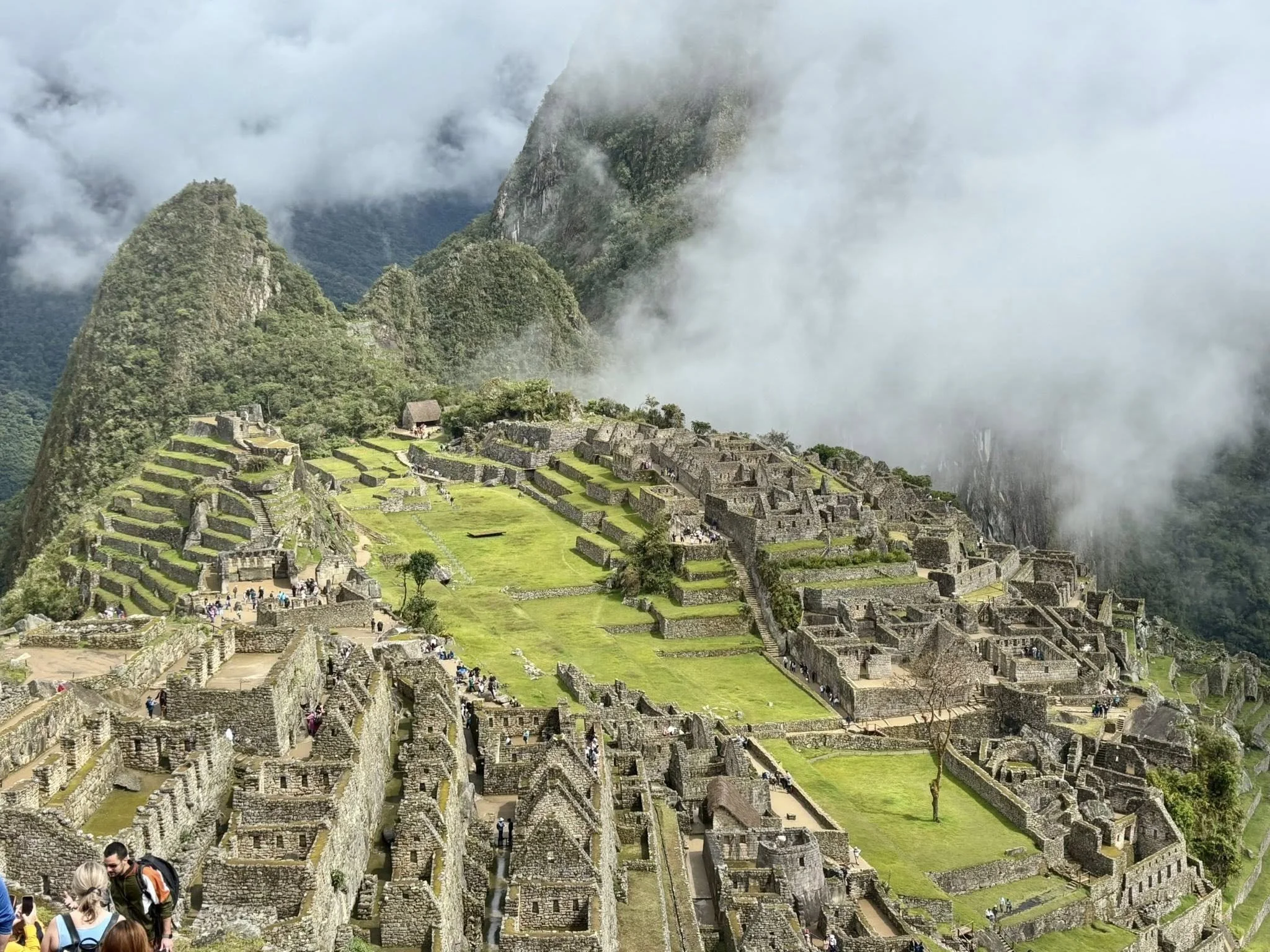
The misty hills of Machu Pichu.
“From the very first village we entered, we were met with radical hospitality—the kind of hospitality that’s lived.”
As we close out the last year and look toward the new one, many people I know are tired in a way that rest alone won’t fix. The work has been heavy and the uncertainty ongoing. If you’re feeling overwhelmed, stretched, or quietly wondering how to sustain this work over the long haul, you’re not alone. And yet, despite everything, countless people continue to show up, to care deeply, and to fight for something better. That matters.
Recently, I had an experience that reminded me that change doesn’t only come from fighting against what’s broken, it also comes from collectively working toward a vision of the future we want. A future where people can easily access the help they need. Where communities solve problems together rather than in isolation. Where people from all walks of life are treated with care and respect. Where human dignity isn’t something that has to be earned.
In November, I had the privilege of traveling to Peru to learn about Minga Perú, an organization supporting Indigenous women and youth throughout the Amazon region. Their work is humble, relational, and rooted in deep respect, as was our learning.
From the very first village we entered, we were met with radical hospitality—the kind of hospitality that’s lived. The kind expressed in shared fruit, shared stories, chairs pulled up in circles, and children leaning into laughter because you handed them a piece of gum. We didn’t speak the same language, but I knew we belonged because the villagers opened their homes and villages to us. Receiving this type of hospitality dissolves the “us/them” line within minutes, and it reminded me that changing systems begins with belonging, not strategy.
Minga Perú also practices something they call constructivism—the belief that strengths already exist in the community, and their role is to help amplify them. In other words: there is no “saving,” only strengthening. No “fixing,” only co-creating through listening and shared learning.
One of the most powerful things about Minga Perú is what they don’t do. They don’t enter a village unless invited. They don’t dictate solutions. They don’t claim expertise over the lived experience of the communities they serve. They lead by invitation, not imposition—a discipline we talk about often at ChangeLine but rarely get to witness in such a pure form.
It was a humbling and transformational experience.
Here at home, especially when the stakes feel high, there can be a pressure and urgency to make sense of things. To frame, diagnose, and interpret through our own lens. In Peru, I practiced something different: listening without sensemaking. I resisted the urge to connect the dots. I listened without trying to pull meaning out of every sentence or determine where it “fits” into my own learning or strategy. Just listening, being present, and letting someone else own the story. It’s harder than I thought, and it’s more freeing than I expected. I urge you to try it, and I’d love to hear more about what you noticed.
I believe learning is most valuable when passed forward. So, I’d like to share some of what I’ll carry from this into this new year, in the hopes that it might be useful to you, too.
Practice radical hospitality.
How we treat each other matters. The everyday practice of making people feel welcome, seen, and valued is the foundation of trust.
Choose curiosity over control.
Resist the urge to immediately sense-make, solve, or decide. Listening—especially when we don’t yet understand—creates space for better ideas and shared ownership to emerge.
Wait for an invitation.
Not every space is ours to enter and not every moment is ours to lead. By waiting to be invited, solutions are shaped by partnership, not control, making them stronger and more likely to last. Consider where you are showing up uninvited, and also consider who gets an invitation to your table.
Honor existing strengths.
Start from the assumption that strength and knowledge already exists within a community. Change is strongest when it amplifies existing strengths and solutions are co-created.
Lead with humanity.
While data can inform decisions, people are moved to act when they feel respected, connected, and cared for.
On their own, these lessons won’t fix what’s broken or make the hard parts of the work disappear. They only matter if we practice them—again and again, in small and imperfect ways.
What gives me hope is that at ChangeLine, we see them in action every day. In our partnerships and in the communities we work with, people are choosing real collaboration over competition, care over cynicism, and connection over isolation—even when it would be easier not to.
As we go into the new year, the journey ahead won’t always be easy. But if I took one thing from my experience in Peru, it’s that we are all travellers, and we don’t have to go it alone. Every conversation, every invitation, every act of hospitality brings us closer together and closer to the future we’re trying to build.
If we keep moving together—practicing care, choosing relationships, and trusting that dignity and belonging matter—I’m confident that we’ll be moving in the right direction.