
Homelessness has solutions—we're testing one of them
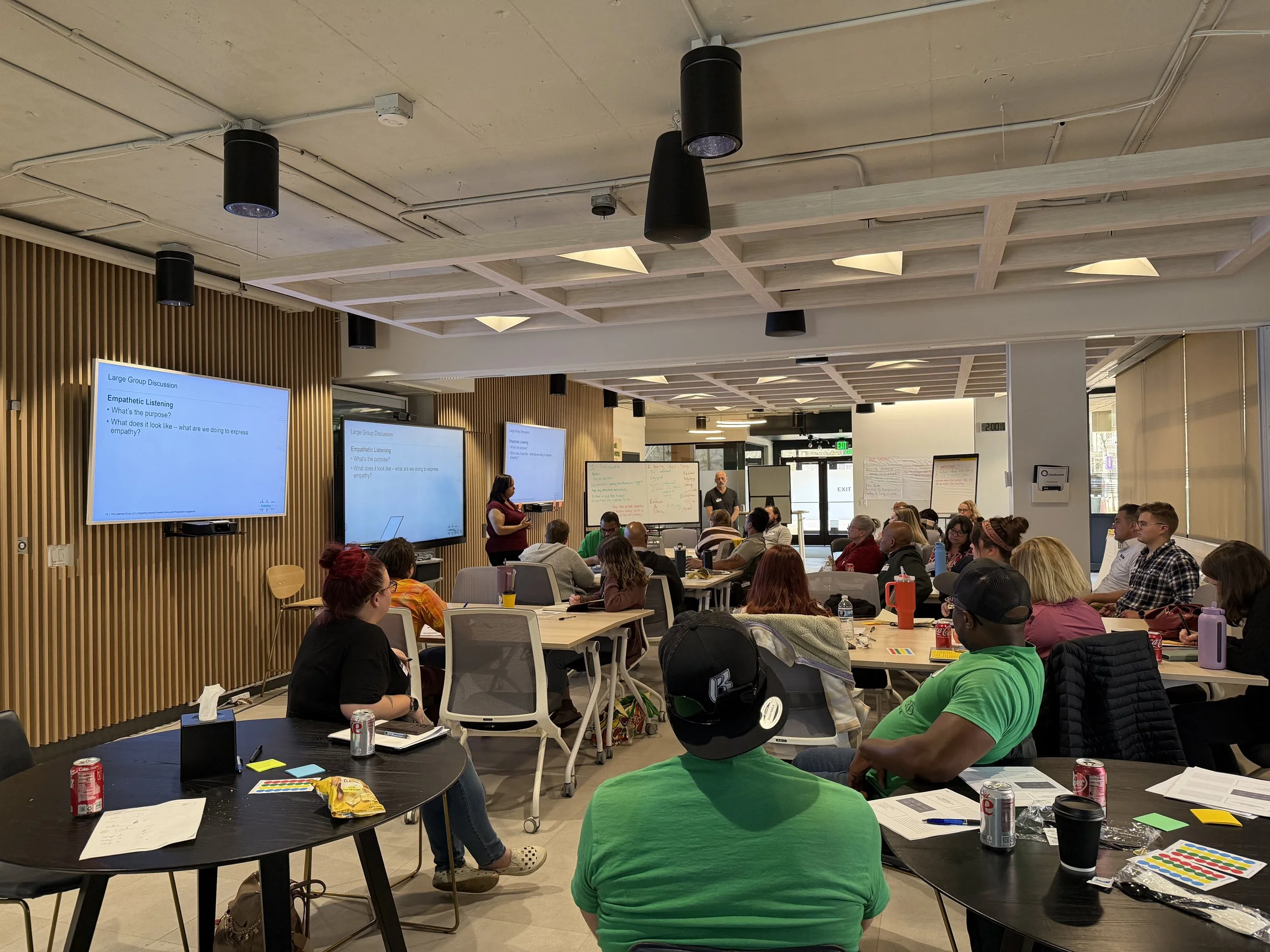
Attendees engage with a presenter during a large group discussion at the Diversion Initiative training.
What if we could prevent homelessness before it begins—by changing the conversation at the door? That's the idea behind diversion, and it's one of the most promising approaches to homelessness our region has seen.
Recently, more than 45 community members gave two full days to explore it together, learning hands-on strategies for helping people navigate a housing crisis before it becomes homelessness. Change starts exactly like this—people showing up, connecting, and doing the work together.
The training kicked off ChangeLine's Diversion Initiative—a partnership with the State of Colorado and the Department of Local Affairs (DOLA) to test and evaluate homelessness diversion approaches that can reduce the number of people entering the homelessness response system in the Pikes Peak region. It was designed with a clear purpose: build shared understanding, sharpen problem-solving skills, and strengthen the collective capacity to make a measurable difference in homelessness here.
The concept behind diversion is simple but profound: when someone is on the edge of losing their housing, the most effective response is an immediate, personalized one. Rather than routing people through the traditional shelter system, diversion meets people where they are—helping them find a path forward using their own relationships, resources, and options, and connecting them to stable housing as quickly as possible.
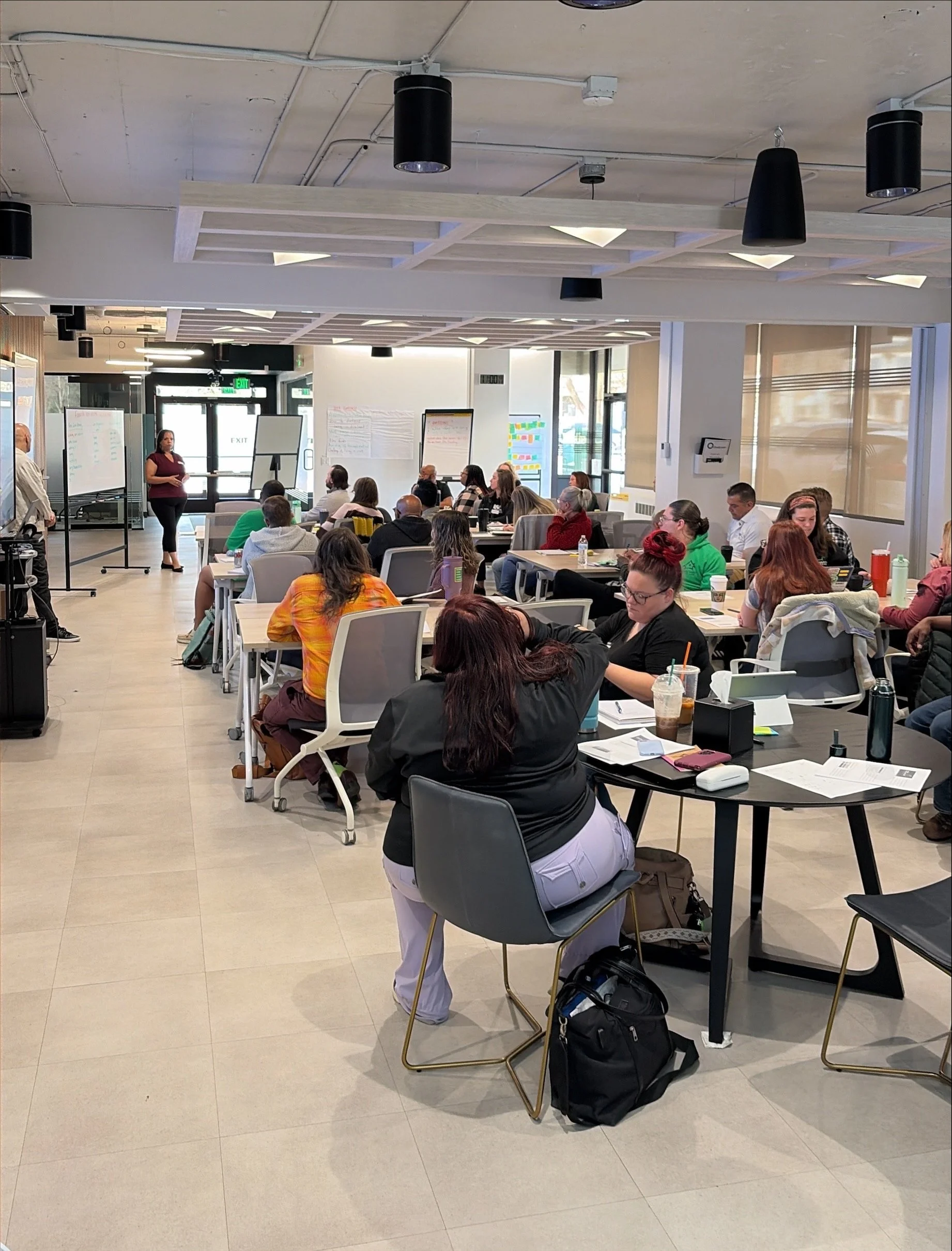
Community partners and practitioners fill ChangeLine's meeting space during the Diversion Initiative training.
As Angela Roberts, ChangeLine’s Homelessness Initiatives Transformation Manager, recently told the Gazette, “The approach focuses on those who have just moved from being at-risk of losing their housing to ‘I have nowhere to go tonight.’ If we have intervention and a successful way of connecting someone to housing in the moment, it’s powerful.”
But what turns a good idea into real impact is the collective action of community. There’s no single cause of homelessness and no single person or organization can solve it alone. It takes alignment across systems and sectors, and people willing to show up consistently and keep working together. That’s not aspiration—that’s what’s already happening here. Everyone who came together for this training is proof of that.